As as undergraduate music student, I was thrilled to hear the Beaux Arts Trio play live at my university. Even better, I was able to go backstage and shake Menahem Pressler's hand, and I was gutsy enough to ask him how he played Brahms with such a tiny hand. The next thing he did I will never forget; he opened his hand like a flower blooming. I could not imagine that a hand could open like that because mine could not, even though, palm to palm and finger to finger, my hand was definitely bigger than his.
This was possibly my most important lesson about the individual differences in muscle and connective tissue qualities, a lesson that would be reinforced throughout the years as I taught students with far more flexibility - and some far less - than I inherited. I have had students with "spider" hands and some with "Daddy Long-legs" hands. I have also had students who were challenged to open to a sixth - "ant" hands?
It is important to understand the difference between muscle and connective tissue. Muscle moves bones, and it is designed to be able to shape-shift quickly in order to accommodate a wide variety of movements. According to
Anatomica, a beautifully illustrated home anatomy book published by Firefly Books, connective tissue is designed to "bind, support or strengthen organs or other tissues". (p. 21) There are various types of connective tissues, but we will be concerned mainly with dense connective tissue as we look at finger movements.
The two types of connective tissue that we deal with most often when learning about movement are tendons and ligaments. Tendons connect muscles to bones, and ligaments connect bones to bones, generally crossing joints. Possibly the most famous of tendons, if fame be so attributed, would be the Achilles tendon. This tendon attaches the calf muscle to the heel and is critical to uprightness and leg movement. Both literally and metaphorically, it is one of our most vulnerable areas.
Likewise there are tendons that connect muscles of the forearm to the fingers. These tendons are long, dense, and responsible for the movements we call flexion and extension. Flexion is the movement fingers make as they bend toward the palm. Extension is the movement fingers make as they open away from the palm. The flexor tendons and muscles are on the under side of the arm, and they provide the range of bending motion for fingers at the MCP joints. This range of motion creates a variety of options for the natural arch that occurs at the MCP joints. The extensors, on the upper side of the arm, can not move fingers far above what looks to be a level position between the metacarpals (in the palm) and the phalanges (the three bones that most people call the fingers).
When I first learned about these long, strong tendons, I was
surprised that my fingers were controlled in large part by the muscles
of the forearm. I had thought that finger "strength" came from
developing finger muscles. However, the insistent pain I had developed
in my forearms fit with my new understanding of the relationship between
forearm muscles and finger movement. The more forceful I was with my
fingers, the more tense I was in my forearms.
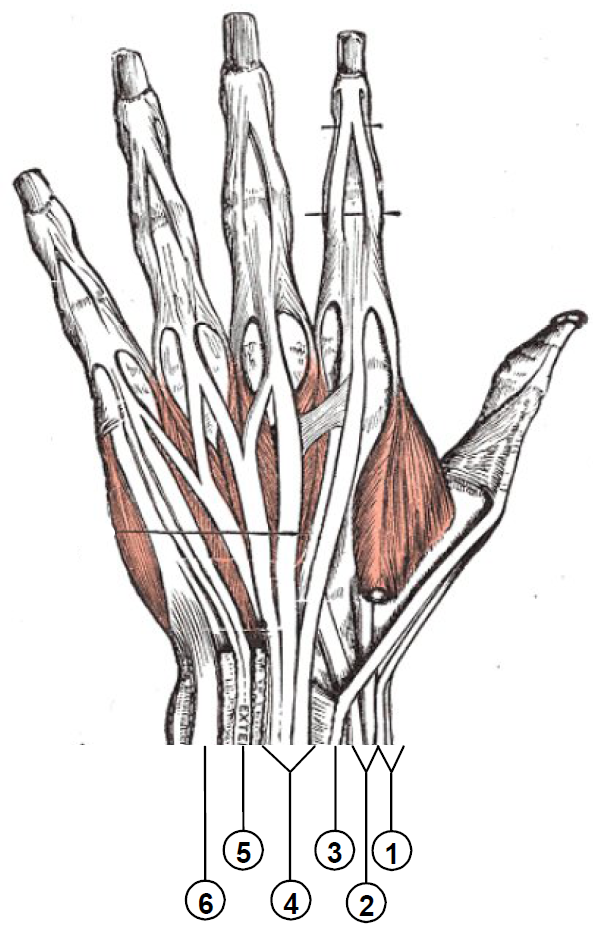
There are genetically controlled individual differences in tendon structure that can affect the range of motion of fifth fingers. As you can see from the illustration below, there is some interconnectedness between the finger tendons, a reminder to reconsider the concept of finger independence exercises. Some hands have a strong connection between four and five that decreases the ability of five to flex on its own. You can explore your own hand for this trait by holding fingers two, three and four together, then attempting to flex finger five toward the palm. In my case, it won't go far at all. Some people have one fifth finger which can flex during this experiment while the other one can not.
 |
| Left hand palm side down, showing extensors |
|
|
In general, muscles are more susceptible to tears than
tendons, but they are structured with multiple layers of fiber that provide a back-up system for injury. Unlike other kinds of connective tissues that are called
"elastic", tendons fall into the category of dense regular connective
tissue. Tendons are not as malleable as muscles because of their critical
need to attach muscles to bones. Tendons can become inflamed from
overuse or improper use, however. If torn, they take longer to heal than
muscle because of their
reduced blood supply.
So, if tendons are not "elastic", how was it that Pressler and my arachnid students could do what they did, which appeared to be stretching? Tune in to Part Four....
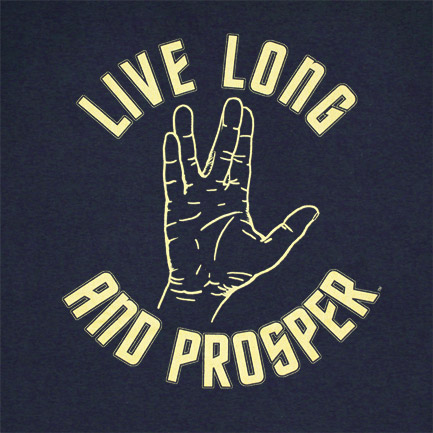 These side-to side movements are called abduction and adduction. In order to clarify these sound-a-likes from each other, medical people will often refer to abduction as A-B-duction. A-B-duction is the action of body parts moving away from each other, or "absenting" their neutral position. Adduction is the action of body parts moving toward each other. If you are a Star Trek fan, you will know how to "live long and prosper" by A-B-ducting finger 3 from finger 4. At the same time, fingers 2 and 3 will be adducting, as will fingers 4 and 5.
 Another interesting group of intrinsic hand muscles is called the lumbricales. These are unusual muscles because they have no bony attachments. They connect to tendons. In this role, they support the flexing action of the tendons at the MCP joints. Remember the Finger Riddler, Arnold Schultz? He contended that allowing the lumbricales to work would take strain off other muscles that may be overworking in finger movement, particularly those of the forearm. Appreciating that there are indeed muscles in the hand that support the flexing movement of fingers helps us have a greater sense of the interplay between tendons, muscles and bones of the hand.